
Back to: Foundations of Art
Unit Objectives
- Identify the elements of art in works of art.
- Relating art to personal experiences
- Respond to and make judgments about works of art.
Unit Materials
Materials vary according to the lessons taught throughout the Unit.
Main Standards
- MA:Cn11.1.I – Relate artistic ideas and works to social, cultural, and historical context to deepen understanding.
- MA:Re7.1.I – Analyze the qualities and relationships among components, style, and preferences communicated by works of art and media artists.
The elements of art are the ingredients that always exist in all works of art. They are indispensable.
If we were talking about mathematics, they would be called the smallest unit of measurement in art. They can be compared to cooking recipes, where each ingredient would be one of the elements of the art. Fortunately, there are only a limited number of art elements and depending on the school of thought in which you train, there are usually 7, 8 or 9 elements.
In this course, we are going to say that there are 7, but they are not in any order of importance in this list;
- line
- figure
- form
- space
- texture
- value or tone
- color
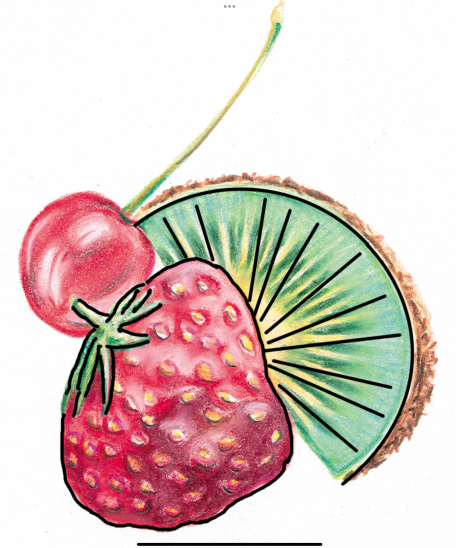
Lines
In this work, you may notice the black lines marked on the art as an example of where they can be found. Notice that many are created by the change of color between one surface and another surface. At the same time, the contours of the objects (fruit, in this case) create real lines.
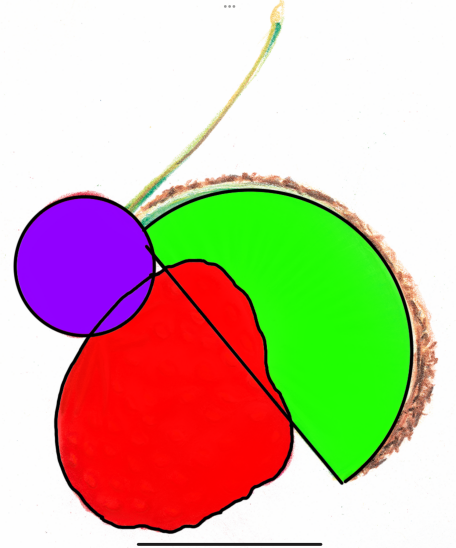
2D Figures
In turn, we can separate the 2-dimensional (2D) figures that we use to build the objects, and fruits, in this case, into shapes that we can recognize from the experience generated when we have enjoyed fruits in our daily lives.
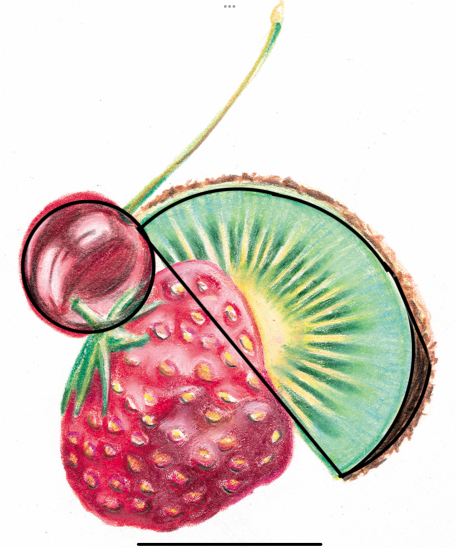
3D Shapes
Sphere (cherry), organic (strawberry) and wedge (kiwi) shapes can be perceived using shades and intensity levels that light touches each surface, from bright to twilight.

Space
In art, space groups both the empty and the full, by an object. In this case, the space that is occupied by the fruits is called “positive” while the empty space is called “negative.”
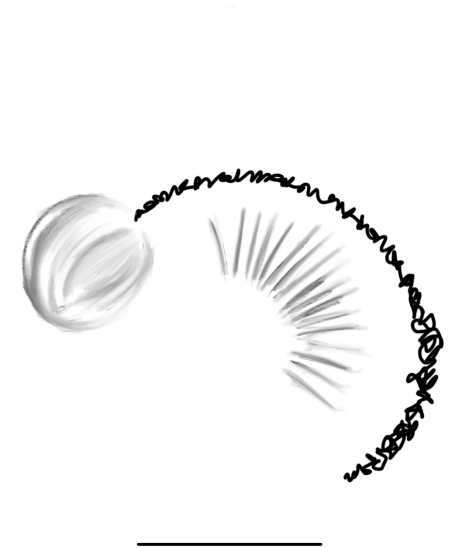
Texture
In terms of texture, the surface of each fruit is different in what we feel tactilely as well as visually. In this case, we can perceive that cherry is smooth and soft to the touch, while strawberry is rough, while kiwi has different parts to the touch as well as visually.
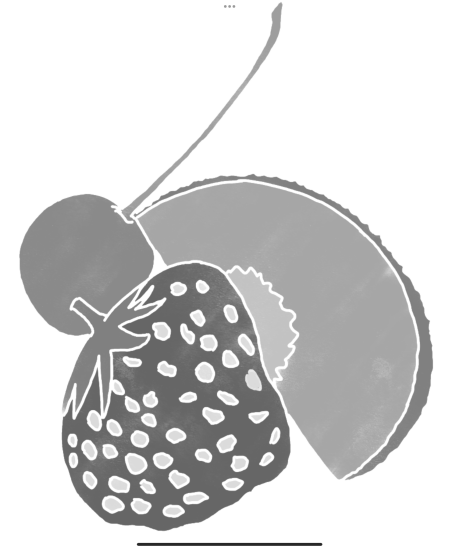
Value and Tone
The value or hue of fruits has to do with their ability to absorb or reflect light and shade from the environment. If you look closely, the amount of brightness and shade that can be perceived between fruits is different and depends not only on the light on the fruit and the positioning of the fruit, but also on the surface of each fruit.
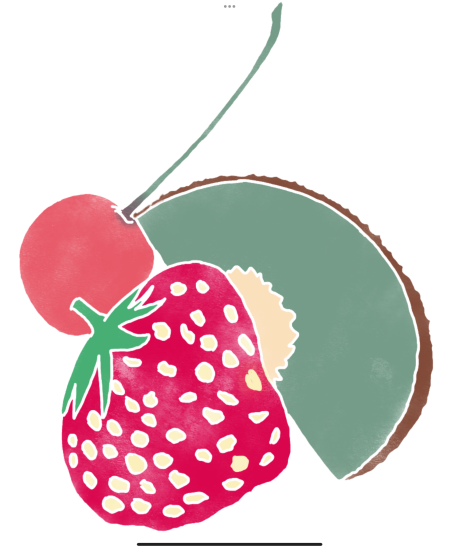
Color
Each fruit has a base color, which scientifically we can say is the color of the light wave, which the fruit reflects back to our eyes (best explained in the color lesson briefly) with the greatest amount. But each fruit also includes other colors in a diminished form of frequency, giving us the tones and values created by light and shadow. We will also learn that the base colors of each fruit combine with colors reflected from their environment to change hues in our vision.
Artists, like scientists, are constantly experimenting and exploring. They like to look for ways to represent what they perceive visually, aurally and physically in the world. In these experiments, artists use available surfaces and materials to create works of art that include all of the above-mentioned elements of art. The experiments constantly consist of mixing and matching these elements in various ways until they achieve what the artist is looking for or perhaps doesn’t know what he or she is looking for – an exploration of sorts.
Following this introduction, we will look at each of them, explaining what they are, how to use them and special notes on the content. We will also do projects that explore their use.